
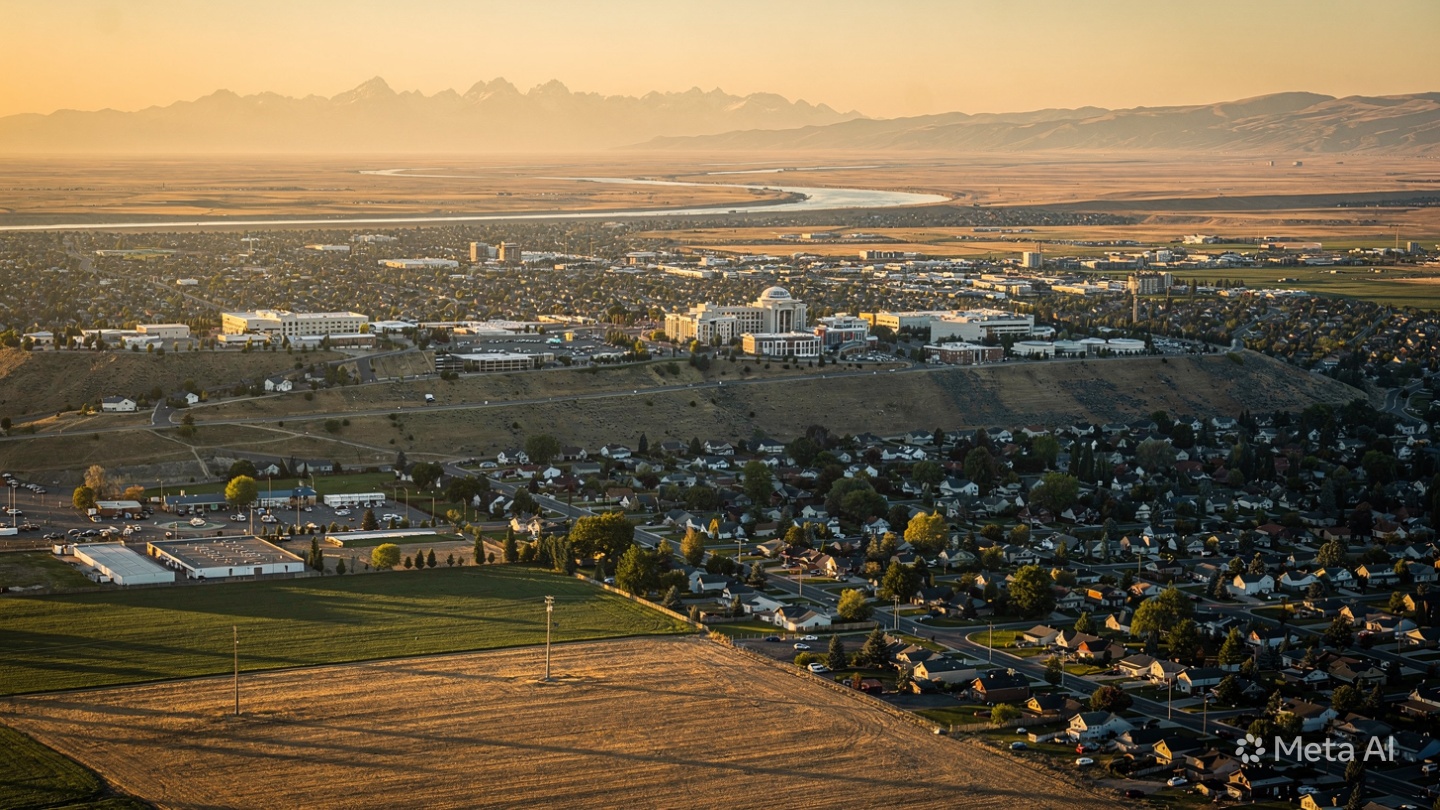
Rexburg, Idaho is one of those places people discover by accident and end up falling in love with. It’s a small city with a real history, a strong community, and a housing market that still makes sense compared to most of the country. If you’re thinking about moving here, or you’re already curious about life in Eastern Idaho, this guide covers everything you need to know: where Rexburg came from, what the different neighborhoods are like, what it actually costs to live here, and what the housing market looks like right now.
Valorie, a real estate agent raised just outside Rexburg who has helped buyers and sellers across Eastern Idaho for years, put together this guide to give you an honest picture of the city. She’s not trying to sell you on it. She just knows it well. You can reach her at 208-403-1859 or visit www.valorieslist.com.
A Brief History of Rexburg, Idaho
The settlement of Rexburg began in 1879, when John Poole, an employee of the Utah Northern Railroad, reported fertile soil in the area. Church of Jesus Christ of Latter-day Saints leaders heard the news and in 1882, sent W.B. Preston and Thomas E. Ricks to inspect the land. Ricks became the community’s founder. Settlers originally called the town Ricksburg, but because the German rendering of “Ricks” is “Rex,” the name was soon changed to Rexburg.
The city was officially founded by Mormon farmers in 1883. It lies in the irrigated agricultural district of the Snake River plain and became a center of grain and dairy production. By the time Idaho entered the Union as the 43rd state in 1890, Rexburg was the second largest city in the state.
The school that would eventually become BYU-Idaho has been woven into Rexburg’s identity from the very beginning. In 1915, Ricks’ name persisted in the naming of Ricks Academy, the first junior college in the Intermountain region. The school’s name was eventually changed to Ricks College, and in 2001, the institution became a four-year school under the name Brigham Young University-Idaho.
Rexburg has also faced serious hardship. Two-thirds of the city was destroyed on June 5, 1976, when the earthen Grand Teton Dam collapsed, spilling billions of cubic feet of water across the plain and forcing the evacuation of more than 300,000 Idahoans. Eleven people died in the flood. What happened next says everything about Rexburg. The “college on the hill” literally became a refuge. Ricks College housed thousands of displaced residents and served 386,000 free meals over the next three months. The city rebuilt, grew, and kept going.
Today, Rexburg carries its history forward without being stuck in it. It’s a university town, a farming community, and a growing small city all at once. The city’s motto is “America’s Family Community,” which reflects what most people feel when they spend time here.
Neighborhoods in Rexburg
Rexburg is not a large city geographically, but the different parts of town have distinct personalities. Here’s a practical breakdown.
Downtown and the University Area
The area closest to BYU-Idaho and downtown Main Street is the most walkable and the most active. You’ll find local restaurants, coffee shops, the Tabernacle, and community events concentrated here. Housing in this area skews toward smaller units and apartments, many of them catering to students. Single-family homes are available but not as common. If you want to walk to everything and be in the middle of community life, this is your neighborhood.
The foot traffic here is high during the school year and noticeably quieter during summer semester breaks. Worth keeping in mind if you prefer consistent activity.
South Rexburg
South Rexburg has grown significantly over the past decade. It’s where a lot of the newer subdivisions and family homes have been built. You’ll find more space here, newer construction, larger lots, and a quieter residential feel. Families looking for a home with a yard and less student-rental energy tend to settle south of town.
This area has become a popular target for buyers relocating from out of state. It offers modern layouts, proximity to schools, and easy access to the main commercial corridor along 2nd East.
North Rexburg and Porter Park Area
The neighborhoods surrounding Porter Park on the north side of town offer a mix of established homes and some newer infill construction. Porter Park itself is a community anchor: a large green space with athletic fields, a pond, and gathering spaces that families use year-round.
Homes in this area tend to be on the more affordable end of Rexburg’s range. The neighborhood has an established, lived-in quality, with mature trees and a mix of longtime residents and younger families.
West Rexburg
West Rexburg sits closer to the agricultural outskirts of town. You’ll find more acreage properties here, larger lots, and in some cases, rural residential parcels that give buyers a bit of that Eastern Idaho open-space feel while still being inside city limits. If you want room to breathe and you’re not attached to being walking distance from campus, western Rexburg is worth a look.
Sugar City and Surrounding Communities
Sugar City sits just a few miles north of Rexburg and is technically its own municipality, but many buyers consider it part of the Rexburg market. It’s smaller, quieter, and generally more affordable. It draws buyers who want the Rexburg school district and proximity to town but prefer a slower pace and a lower price point.
Cost of Living in Rexburg
Rexburg is not the cheapest place to live in the country, but it’s considerably more affordable than most mid-sized American cities. The Rexburg cost of living index is 116, which is 16% higher than the national average. That number is shaped significantly by housing. Day-to-day expenses, groceries, utilities, and healthcare compare reasonably well against other Idaho cities.
Rexburg, Idaho area prices were up 2.5% from a year ago in 2026, with the largest increases found in transportation, food, and housing.
For renters, the picture is fairly approachable. As of May 2026, the average rent in Rexburg is $999 per month, which is 39% lower than the national average rent of $1,625 per month. A studio runs around $689, a one-bedroom around $999, and a two-bedroom around $1,151.
The university does shape the rental market. A large portion of available rentals are student-oriented units, which affects both pricing and availability. Families and non-student buyers looking for quality long-term rentals or homes to purchase will find the process easier with a local agent who knows which properties are investor-owned versus owner-occupied.
Idaho’s income tax is higher than many people expect. Idaho state income tax runs 123% higher than the national average, so factor that into any side-by-side comparison with states like Nevada or Washington that have no income tax. That said, property taxes in Idaho remain low compared to the national average, which matters a lot if you’re buying.
The Rexburg Housing Market
Rexburg’s housing market has been active and, in some metrics, surprising. In November 2026, Rexburg home prices were up 37.6% compared to last year, with a median sale price of $412,000. On average, homes sell after 59 days on the market, compared to 62 days the year prior.
The city has 9,212 total housing units, with large apartment complexes being the single most common housing type, accounting for 55.70% of units. Single-family detached homes make up 21.93% of the market. That mix reflects the university’s influence: a large renter-heavy student population pulling apartment construction, while the family homeowner market operates in a tighter segment.
For buyers, that means competition. Quality single-family homes in desirable neighborhoods move. When something is priced right in South Rexburg or near Porter Park, it doesn’t sit for months.
A composite example from Valorie’s experience: a family relocating from the Pacific Northwest spent three months browsing Zillow and Realtor.com and couldn’t get a clear picture of what was actually available versus under contract. Once they worked with a local agent who had live MLS access, they identified two properties within a week, submitted a competitive offer on the second one, and closed in 30 days. The national portals show listings. A local agent shows you what’s actually happening.
Common Mistakes Buyers Make in Rexburg
Assuming student-area pricing applies everywhere. The rental market near campus skews pricing perceptions. A turnkey family home in South Rexburg operates at a different price level than a student apartment near Main. Don’t use the wrong comps.
Waiting for prices to drop significantly. Rexburg’s population is tied to a university that keeps growing. Demand has a built-in floor here. Waiting for a major correction is a strategy that has cost buyers in similar university markets before.
Overlooking Sugar City and the surrounding areas. Buyers focused on Rexburg proper sometimes miss excellent value just a few miles away. Sugar City and rural parcels near the city limits offer meaningful savings with minimal trade-offs for families who don’t need walkable access to campus.
Not accounting for university semester cycles. New listings sometimes spike at the end of academic terms when student-area landlords and investors list. Knowing the calendar helps buyers time their search.
Frequently Asked Questions About Living in Rexburg
Is Rexburg a good place for families?
Yes. It’s consistently rated as one of the safer small cities in Idaho. The school district serves the community well, outdoor access is excellent, and the cost of buying a family home is still manageable compared to Boise or the Treasure Valley.
How far is Rexburg from Idaho Falls?
About 25 miles northeast, roughly a 30-minute drive. Many residents commute between the two cities for work. Idaho Falls offers a larger commercial base, hospital, and airport, while Rexburg offers a quieter pace and lower housing costs.
Does BYU-Idaho affect the housing market?
Significantly, yes. It drives apartment construction, shapes the rental market, and creates consistent demand. For buyers looking at single-family homes, it means the available inventory is smaller but the demand from families and non-student buyers remains steady.
What’s the best neighborhood in Rexburg for families?
South Rexburg gets the most consistent praise for newer construction, quiet streets, and proximity to schools. The Porter Park area is also popular with families who want an established neighborhood feel.
Is now a good time to buy in Rexburg?
With appreciation running strong and inventory still tight, buyers who wait often find themselves paying more for the same home a year later. The better question is whether your specific financial situation is ready, and that’s a conversation worth having with a local agent before you decide.
Find Your Home in Rexburg with Valorie
If you’re ready to buy in Rexburg, or just starting to figure out if it’s the right fit, Valorie with Valorie’s List @ Idaho’s Real Estate can help. Among the best real estate agents in Idaho Falls and Rexburg, Valorie stands out for her deep local knowledge and straightforward approach. She grew up near Rexburg, she knows the neighborhoods, and she’s helped buyers across Eastern Idaho navigate markets just like this one.
She’s not going to tell you what you want to hear. She’s going to tell you what you need to know. Call her at 208-403-1859 or visit www.valorieslist.com to get started.