
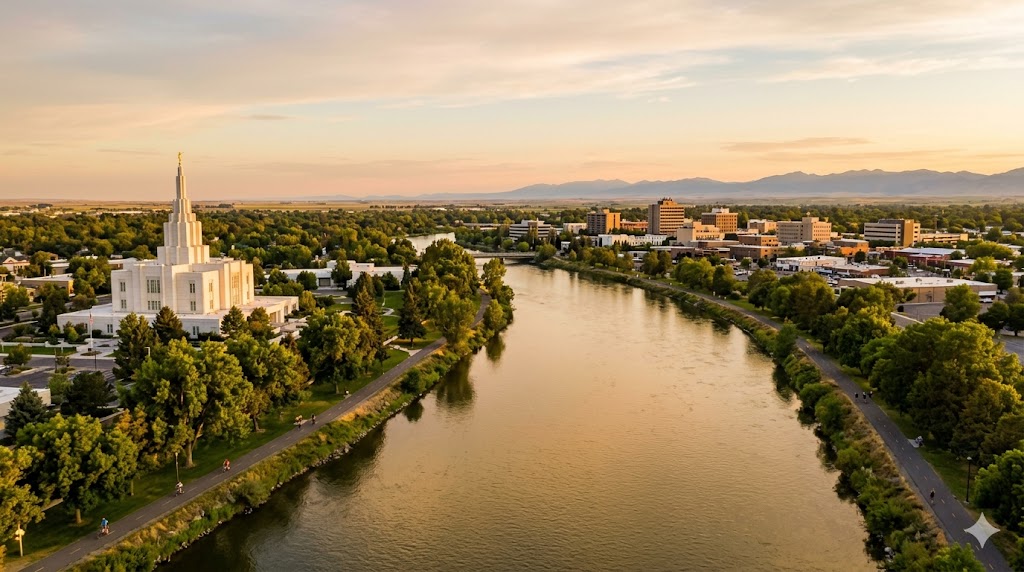
Idaho Falls is Eastern Idaho’s largest city, and for good reason. It has the Snake River running through its center, a downtown worth walking, proximity to Yellowstone and Grand Teton that most Americans would pay a premium to live near, and a housing market that still makes sense for working families. If you’re considering a move here, or you’re just trying to get a real picture of what life in Idaho Falls looks like, this guide covers the history, the landmarks, the best neighborhoods, what daily life costs, and what the housing market looks like right now.
Valorie is one of Eastern Idaho’s most experienced real estate agents, serving buyers and sellers in Idaho Falls, Rexburg, Rigby, and surrounding communities. She grew up near Rexburg, knows this market at a level no national portal can replicate, and put this guide together to give people an honest picture of one of the most livable cities in the Mountain West. You can reach her at 208-403-1859 or visit www.valorieslist.com.
The History of Idaho Falls
Idaho Falls did not start as Idaho Falls. It started as a river crossing, and the name came later as a calculated rebranding effort by local business interests trying to attract settlers.
The history of Idaho Falls dates back to the mid-1860s during the active settlement of the American West. The settlement was initially known as Eagle Rock, a name that came from a small island on the Snake River where eagles nested on basalt rocks. The actual founding of the city traces to 1864, when entrepreneur Matt Taylor constructed a wooden toll bridge across the Snake River. That bridge replaced an unreliable ferry crossing and became a critical link for prospectors and wagon trains heading toward the gold mines of Montana.
In 1879, the railroad reached Eagle Rock. The Utah and Northern Railroad built a line spanning the Snake River, turning Eagle Rock into a railroad boomtown. New businesses opened and new arrivals settled in the area. The population grew fast, and with it the demand for a more marketable identity.
The name change was deliberate. In 1891, the community officially became Idaho Falls to promote settlement by highlighting the Snake River rapids. Local business interests drove the rebranding to attract farmers and commerce, capitalizing on the river’s potential for hydropower.
In 1900, Idaho Falls became the first city in Idaho with an electric power plant. That distinction mattered enormously. The construction of municipal hydroelectric power stations provided the city with cheap electricity, a competitive advantage that supported local production and kept utility costs low for residents for nearly a century.
The biggest economic transformation came from science, not farming. The creation of the National Reactor Testing Station west of the city in 1949, now known as Idaho National Laboratory (INL), radically changed the demographics and economy of Idaho Falls. The city filled with engineers and scientists, transforming from an agrarian center into a hub of high technology and nuclear energy.
INL remains one of the largest employers in Eastern Idaho today and is the primary reason Idaho Falls carries a more diverse professional economy than most comparable small cities in the Mountain West.
Landmarks Worth Knowing
Idaho Falls punches well above its weight for a city of 70,000 when it comes to landmarks and cultural institutions.
The Idaho Falls Greenbelt
The Greenbelt is the city’s defining public space. Miles of paved trails wind along the Snake River, perfect for walking, jogging, and cycling along the riverfront. It connects city parks, picnic areas, and river overlooks in a way that makes the waterfront a daily destination for residents. The falls themselves are visible from multiple points along the path. It’s the first thing most people fall in love with when they visit.
The Idaho Falls LDS Temple
The temple sits on the west bank of the Snake River and is visible from nearly every approach into downtown. It was the first LDS temple built outside of Utah, dedicated in 1945, and its riverfront position makes it one of the most photographed landmarks in Eastern Idaho. Non-members are welcome at the adjacent visitor center.
Museum of Idaho
The Museum of Idaho links the historic Carnegie Library and Masonic Temple buildings with a modern glass atrium. It includes a natural history section going back to the dinosaur era, exhibits on Native American history through Idaho’s founding, and an immersive street-level exhibit replicating businesses from over a century ago, plus interactive areas for children. It’s among the best regional museums in the state.
Eagle Rock Fountain
At the center of a roundabout stands the Eagle Rock Fountain, billed as the largest eagle monument in the world. Completed in 2006, the base rises 26 feet with cascading water. Sculptor Vic Payne produced the bronze eagles at three times life size, with a 21-foot wingspan. It’s a direct nod to the city’s original name and one of the more striking pieces of public art in the region.
Colonial Theater
Originally opened in 1919, the Colonial Theater on Park Avenue is Idaho Falls’s historic performing arts venue. It hosts live theater, concerts, and community performances. It’s a genuine piece of downtown history that still draws crowds.
Japanese Friendship Garden
A quietly designed garden near the river reflecting cultural exchange between Idaho Falls and its Japanese sister city. Stepping stones, water features, and rock arrangements create a serene space that catches visitors off guard. It’s a clever design that incorporates elements of stone and water and sits just steps from the roaring falls.
Things to Do in Idaho Falls
Idaho Falls has more going on than most people expect from a small Eastern Idaho city.
Outdoor Recreation
The Greenbelt is the daily anchor for outdoor activity. Fishing the Snake River is popular year-round. Tautphaus Park offers a complete municipal park experience with a zoo, athletic facilities, and event space. Beyond the city itself, Yellowstone National Park is about 110 miles north, Grand Teton is closer still, and Island Park is within an hour. For outdoor-minded buyers, Idaho Falls is simply the most practical base in Eastern Idaho.
Arts and Culture
The cultural scene includes live performances at the Colonial Theater and rotating exhibits at the Museum of Idaho. The Art Museum of Eastern Idaho on the river landing hosts regional and traveling exhibitions. ARTitorium on Broadway is an interactive arts space built for families. The city runs a summer concert series along the Greenbelt that draws consistent community turnout.
Dining and Local Business
Downtown Idaho Falls has developed a legitimate local dining scene over the past decade. Farm-to-table restaurants, craft breweries, coffee roasters, and independent retail reflect a city growing into its commercial identity. The Snake River Landing development anchors the newer end of the dining and entertainment corridor. The Teton Mall area on the north end of town handles most of the major retail needs, with national chains filling out what local businesses don’t cover.
Sports and Family Activities
The Idaho Falls Chukars are the city’s minor league baseball team and one of the more affordable family entertainment options in the region. The Wes Deist Aquatic Center handles competitive and recreational swimming. Ice skating, indoor recreation, and youth sports leagues are well-organized and well-attended in a city that takes community programming seriously.
Neighborhoods in Idaho Falls
Idaho Falls has enough geographic spread and population diversity that where you land within the city matters. Here’s a practical breakdown of the areas buyers most often consider.
Downtown and the Riverwalk
Downtown and Riverwalk offer historic homes near cultural amenities and the Greenbelt. Smaller lots and more home maintenance are common tradeoffs for the walkability. If you want to walk to the museum, the Colonial Theater, and the river trail from your front door, this is your area. Homes here have character. They’re older, they require attention, and they reward buyers who value location over new construction. Idahofallsmagazine
Sunnyside
Located just south of downtown, Sunnyside is widely regarded as one of the best neighborhoods in Idaho Falls for families and first-time buyers. It offers top-rated schools, parks, and a strong residential feel. It’s a middle-ground neighborhood in the best sense: not too far from downtown, not too far from commercial corridors, with a genuine community feel that’s hard to manufacture in newer subdivisions.
Ammon
Ammon is technically its own city but functions as Idaho Falls’s most prominent eastern suburb. Residents consistently describe Ammon as a clean, close-knit community that’s excellent for families and feels genuinely safe. Newer subdivisions dominate here, and the area has grown substantially over the past decade. The Comore Loma subdivision in Ammon spans a large area along mountainous foothills, with lot sizes from 1.5 to 7 acres and homes ranging from $250,000 to $1 million. Buyers who want newer construction, larger floor plans, and a family-oriented environment without sacrificing access to Idaho Falls amenities land in Ammon consistently. U.S. HistoryTravel Thru History
West Side and Snake River Landing
The west side and Snake River Landing area offers newer mixed-use and single-family options close to riverfront parks and shopping, with convenient access to major corridors. This is the most actively developed part of Idaho Falls and appeals to buyers who want modern layouts with walkable access to the commercial and recreational waterfront. Idahofallsmagazine
Lincoln and Established South-Side Neighborhoods
Lincoln is rich in history yet carries a mix of old-world charm and modern convenience, standing as a testament to Idaho Falls’s growth. The established south-side neighborhoods offer mid-century homes with mature trees, central access to services, and price points that often undercut the newer-construction areas. For move-up buyers who want more home per dollar, the south side delivers.
Iona
Iona sits just northeast of Idaho Falls and offers a genuinely rural character without losing access to city infrastructure. Iona homes often sit on larger properties with room for gardens, hobby farming, or peaceful surroundings. The community maintains a rural character while benefiting from proximity to Idaho Falls services and employment. It’s a consistent recommendation for buyers who want acreage without committing to a fully remote rural property.
North Idaho Falls and Timberline Estates
Along North Mapleview Drive, approximately five miles north of Idaho Falls, Timberline Estates offers upscale homes with views and a more secluded residential feel. This area appeals to buyers at the higher end of the Idaho Falls market who want separation from the city’s denser corridors while staying connected.
Cost of Living in Idaho Falls
Idaho Falls is more affordable than the national narrative about Idaho would suggest. The Boise boom has driven Idaho’s overall cost-of-living reputation, but Idaho Falls sits in a different category.
The median household income in Idaho Falls is $70,285, and the average commute time is about 13 minutes. Median rent runs around $1,027 per month. That commute number is worth sitting with: 13 minutes average is exceptional for a city with real employment infrastructure. People who relocate from major metros often describe the absence of a commute as one of the most meaningful quality-of-life improvements they didn’t anticipate.
Idaho Falls offers a higher value of living compared to similarly sized cities, and housing costs compare favorably to the median household income. Idaho’s property taxes are low relative to most of the country. Utilities, groceries, and healthcare come in below the national average in most categories. The income tax rate is higher than in zero-income-tax states like Nevada or Washington, so that’s worth factoring into relocation comparisons. But the overall picture is a city where a family earning a middle-class income can own a home and live comfortably.
The Idaho Falls Housing Market
In November 2025, Idaho Falls home prices were up 2.5% compared to the prior year, selling for a median price of $379,000. On average, homes in Idaho Falls sell after 52 days on the market.
Single-family detached homes are the most common housing type in Idaho Falls, accounting for 66% of the city’s housing units. The median house value sits at $409,525. That ownership-heavy mix reflects a city of residents, not renters, and creates the neighborhood stability that families moving to Idaho Falls consistently comment on.
The market has layers. Established south-side homes offer value in the $300,000s. Ammon’s newer construction typically starts in the mid-$300,000s and runs higher for larger lots and premium finishes. Acreage properties in Iona and the county outskirts span a wide range, depending on land size and improvement quality.
A common experience Valorie sees with out-of-state buyers: they arrive with a Zillow-built picture of the market, identify three or four properties they want to see, and discover that two are already under contract and one has been relisted due to a failed inspection. The national portals lag real-time MLS data by anywhere from days to weeks. In a market with a 52-day average days on market, that lag is the difference between seeing the right house and missing it.
With over $100M in Eastern Idaho sales, Valorie works from live data, not aggregated listings. That matters in a market this specific.
Common Mistakes Buyers Make in Idaho Falls
Treating all neighborhoods as interchangeable. Ammon, downtown, Sunnyside, and Iona each represent genuinely different lifestyles and price dynamics. A buyer who searches “Idaho Falls homes” without understanding neighborhood distinctions ends up with the wrong fit.
Assuming the INL employment base is irrelevant to them. Even if you don’t work at INL, it shapes the economy of the entire metro. High-skilled employment creates stable incomes, stable neighborhoods, and long-term demand for housing. It’s one of the structural reasons Idaho Falls has held value through broader market shifts.
Overlooking Iona and Ammon for acreage buyers. Buyers who want land often think they need to go to Rigby or Saint Anthony. There are legitimate acreage options within 10 minutes of Idaho Falls commercial infrastructure. They’re competitive, but they exist.
Not accounting for school district boundaries. Idaho Falls has multiple school districts serving different parts of the metro. Ammon and Idaho Falls proper don’t always share boundaries. Confirming which district serves a specific address before falling in love with a house saves real frustration.
Frequently Asked Questions About Living in Idaho Falls
How close is Idaho Falls to Yellowstone?
About 110 miles north, roughly a 90-minute drive under normal conditions. Most Idaho Falls residents make that trip multiple times a year.
What is Idaho National Laboratory and how does it affect the city?
INL is one of the nation’s premier nuclear energy research facilities, employing thousands of engineers, scientists, and support staff. It’s the backbone of Idaho Falls’s professional employment base and the reason the city has a higher median income than most comparably sized Mountain West cities.
Is Idaho Falls a good place for families to Buy a house?
Yes. Idaho Falls has a median age of 33.2, a short average commute, and a median household income that supports comfortable homeownership. Schools, parks, sports leagues, and outdoor access are all strong, and the city’s size means you get real amenities without the density costs of larger metros.
What’s the best neighborhood in Idaho Falls for first-time home buyers?
Sunnyside gets consistent praise for its combination of affordability, school access, and neighborhood character. Established south-side streets offer good value for buyers willing to take on some cosmetic updating.
Is now a good time to buy a house in Idaho Falls?
Idaho Falls home Prices are up year-over-year, and inventory stays competitive on well-priced properties. Buyers who wait often find themselves paying more for the same home 12 months later. The better question is whether your financial situation is ready, and that’s a conversation worth having with a local agent before you decide.
Find Your Home in Idaho Falls with Valorie’s List
If you’re ready to buy in Idaho Falls, or just starting to figure out where to look, Valorie with Valorie’s List @ Idaho’s Real Estate is the call to make. Among the best real estate agents in Idaho Falls and Rexburg, Valorie stands out for her deep local knowledge and straightforward approach. She’s helped buyers navigate every price point and every neighborhood this market has to offer, from first homes in Sunnyside to acreage properties in Iona to move-up purchases in Ammon.
She won’t tell you what you want to hear. She’ll tell you what you need to know.
Call her at 208-403-1859 or visit www.valorieslist.com.