
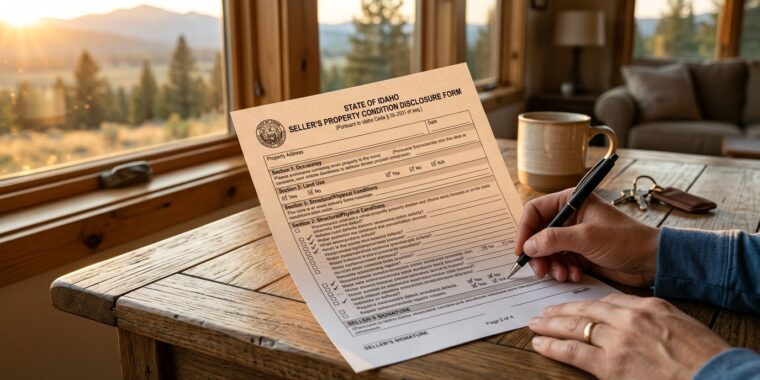
Every Eastern Idaho home seller should understand the Idaho seller property disclosure before listing. Idaho law requires most sellers of residential property to complete a standard form about what they know of the home. Buyers rely on that form, and sellers can face real trouble if they fill it out carelessly. This guide explains the basics in plain English.
This article is general education, not legal advice. The rules have exceptions, so confirm your situation with an Idaho real estate attorney.
- What the Seller Property Condition Disclosure Is
- What the Form Asks You to Disclose
- Who Is Exempt, and When to Deliver the Form
- Common Mistakes Idaho Sellers Make
- How Disclosure Affects Your Sale and Your Price
- Tips for Completing the Form Well
- Frequently Asked Questions
- Work With a Local Eastern Idaho Real Estate Expert
- Your Idaho Seller Property Disclosure: Next Steps
What the Seller Property Condition Disclosure Is
Idaho Code Title 55, Chapter 25 sets out the Property Condition Disclosure Act. It applies when an owner plans to transfer residential property with one to four dwelling units. The law covers sales, and it also reaches some exchanges, installment contracts, and lease-option deals.
The form asks what you actually know about the home. It is not a warranty, and it does not replace a professional inspection. Instead, it puts your known issues in writing so the buyer can make an informed decision.
Many people call Idaho a non-disclosure state, but that label is misleading. Read our Idaho non-disclosure state guide to see how sales prices and seller duties differ.
What the Form Asks You to Disclose
The statewide form walks through the major systems and conditions of the property. You answer based on your own knowledge, and you can add explanations where needed. Topics typically include:
- The water source, sewer system, and septic or well details
- Structural condition, including the roof, foundation, walls, and floors
- Problems with plumbing, electrical, heating, or drainage
- Basement water or moisture problems
- Hazardous materials and pest infestations
- Additions or alterations made without permits
- Easements, encroachments, or other title concerns
- Whether major appliances and systems work properly
The form also has a catch-all question about any other known problems, legal or physical. Therefore, the listed topics do not limit what you should share. If you know about it and a buyer would care, put it on the form.
Who Is Exempt, and When to Deliver the Form
The law lists several exemptions in Idaho Code 55-2505. For example, court-ordered transfers, many estate and trust transfers, foreclosure sales, and transfers between spouses or close relatives may be exempt. Newly built homes that no one has lived in also have special treatment.
Selling an inherited home or a probate property? Exemptions often apply, but the details matter. Ask an attorney before you skip the form.
For most sellers, timing is simple. The statute calls for delivering the signed form within ten days after the seller accepts the buyer’s offer. The buyer then signs to acknowledge receipt. If the form arrives after the buyer signs a purchase agreement, the buyer may have a short window to rescind. Check the current rules with your agent or attorney.
Common Mistakes Idaho Sellers Make
Most disclosure disputes come from avoidable errors. Sellers often rush the form or guess at answers. In addition, some assume that a repair fixes the need to mention the problem.
- Leaving questions blank instead of answering “no” or “unknown” honestly
- Skipping past leaks, past water damage, or old repairs because they were fixed
- Forgetting unpermitted work, such as a finished basement or a converted garage
- Ignoring septic or well problems on rural properties
- Failing to update the form when new information appears before closing
The law expects good faith. The statute allows a seller to amend the form, and it requires an update if information changes before closing. A seller who willfully or negligently violates the chapter can be liable for the buyer’s actual damages. Buyers may also pursue other claims, such as fraud, under separate law.
How Disclosure Affects Your Sale and Your Price
Honest disclosure usually protects you more than it hurts you. A buyer who learns about a problem early can negotiate, schedule an inspection, and move forward with fewer surprises. A buyer who discovers a hidden problem after closing is far more likely to call a lawyer.
Furthermore, a clear form can speed up negotiations. Sellers who fix known issues before listing often avoid repair credits later. Our guide on what it costs to sell a house in Idaho Falls shows where repair money usually goes.
If you plan to sell as-is, you still need to complete the form where the law applies. Selling as-is changes the repair conversation, but it does not erase your duty to share what you know.
Rural sellers should pay extra attention to water and sewer questions. Many Eastern Idaho acreage homes rely on wells and septic systems, and buyers often ask detailed questions about them. For example, share any known well flow issues, pump repairs, or septic pumping history. In addition, our Idaho water rights explained article covers a related topic that rural buyers often raise.
Tips for Completing the Form Well
Start by walking the property with the form in hand. Gather permits, repair receipts, and any past inspection reports. Then answer each question from your own experience of living there.
Next, share the draft with your listing agent before it goes to buyers. An agent can spot items that sellers often overlook. For help with the bigger picture, see the guide to living in Idaho Falls for local market context.
Frequently Asked Questions
Does every Idaho seller have to fill out the disclosure form?
No. Several transfers are exempt, including many court-ordered, estate, and trust sales. However, most standard residential sales are covered, so ask your agent or attorney before assuming you are exempt.
Do I have to hire an inspector before I fill it out?
No. The form reflects your actual knowledge, and the law does not require you to hire an inspector to complete it. Buyers are still encouraged to order their own inspections.
Can I sell my house as-is and skip the form?
Generally not, if your sale is covered by the law. An as-is sale changes how repairs are handled, but the disclosure duty still applies to what you know.
What if I remember a problem after I deliver the form?
Amend the form in writing as soon as you can. The statute requires an update if information changes before closing. Doing so protects you and keeps the buyer informed.
What happens if I leave out a known defect?
A seller who willfully or negligently violates the law can be liable for the buyer’s actual damages. Other claims may also apply. Talk with an Idaho real estate attorney if you face a dispute.
Work With a Local Eastern Idaho Real Estate Expert
If you’re preparing to sell a home in Eastern Idaho, it helps to work with an agent who actually knows the area. Valorie Blanchard of Valorie’s List @ Idaho’s Real Estate is a lifelong Eastern Idaho resident, born in Rexburg and raised on a family farm that’s been in her family since the 1800s. She’s an Associate Broker and GRI Graduate with a decade of experience helping buyers and sellers throughout Idaho Falls, Rexburg, and the surrounding communities, backed by a strong digital marketing background and firsthand knowledge of the local market. Learn more about Valorie or reach out directly for current listings.
Your Idaho Seller Property Disclosure: Next Steps
Your Idaho seller property disclosure is one of the most important documents in your sale. Complete it honestly, update it when facts change, and keep copies of everything. Finally, confirm the details of your situation with a qualified Idaho real estate attorney before you list.