
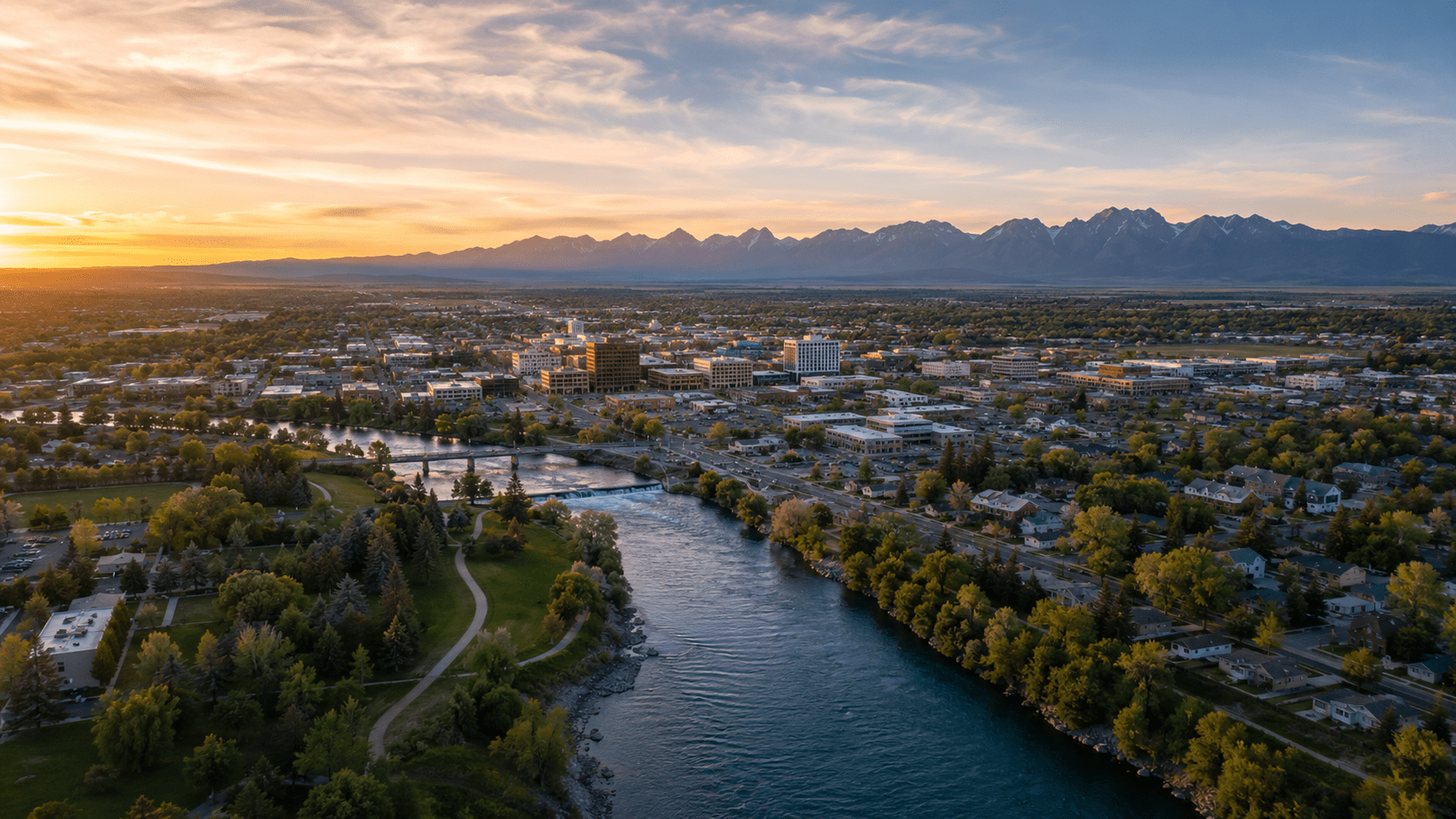
Idaho Falls keeps showing up on relocation lists, and it’s not hard to see why. Affordable housing relative to the West Coast, a strong job market anchored by a national laboratory, outdoor recreation within driving distance of two national parks, and a community that still feels like a real place rather than a sprawl of subdivisions. It checks a lot of boxes.
But Idaho Falls is not the right move for everyone. The winters are serious. The dining and entertainment scene is limited compared to any major metro. Cultural diversity is thin. And if you’re coming from a city with walkable neighborhoods and reliable public transit, the adjustment can be jarring.
The Milken Institute ranked Idaho Falls as the top-performing small city in 2026 for job creation, wage gains, and GDP growth. That’s a meaningful signal. It’s also just one number. This article gives you the full picture, both sides, so you can decide whether Idaho Falls actually fits your life. Idahoperfecthome
Valorie is a real estate agent based in Eastern Idaho with over $100M in sales who helps buyers relocating to the Idaho Falls area navigate the market every year. She grew up on a farm near Rexburg and knows this region at the community level. For buyers and sellers across Eastern Idaho, Valorie with Valorie’s List @ Idaho’s Real Estate is a go-to resource for honest, local guidance. If you’re considering a move to Idaho Falls and want to talk through neighborhoods and what to expect, reach her at 208-403-1859 or visit www.valorieslist.com.
Pro: Cost of Living That Actually Makes a Difference
For buyers coming from California, Washington, Oregon, or Colorado, Idaho Falls doesn’t just feel affordable. It represents a genuinely different financial situation.
The cost of living index in Idaho Falls is 87, which is 13% lower than the national average. Housing sits at 79, utilities at 83, and health costs at 92 relative to the national benchmark of 100. Rentometer
Median home prices in Idaho Falls sit around $359,816, with average monthly rents around $1,250. One and two-bedroom apartments typically rent for $870 to $1,100 per month, and larger three and four-bedroom homes rent for $1,500 to $2,100, depending on location and condition. Idahoperfecthome
For people moving from California, Washington, Oregon, or Colorado, the overall cost of living in Idaho feels more manageable. Daily expenses such as groceries, transportation, and utilities tend to be more manageable than in neighboring coastal states. redfin
The practical effect of this: families who were perpetually priced out of homeownership in their previous city often find that a down payment and a monthly mortgage in Idaho Falls is genuinely within reach. That’s not a small thing, and it’s one of the most commonly cited reasons people give for making the move.
Pro: A Strong, Diversified Job Market
Idaho Falls isn’t a one-industry town, though it does have one anchor employer that sets the economic tone.
Idaho National Laboratory is one of the U.S. Department of Energy’s national laboratories, with approximately 5,700 staff and a research focus spanning nuclear energy, national security, energy, and environment. INL is the largest employer in the region and a significant draw for engineers, scientists, project managers, and support professionals. Most weekdays, INL employees commute on a motor coach system from Idaho Falls park-and-ride locations to the campus roughly 50 minutes west of the city. Wikipedia Homes.com
Beyond INL, Idaho Falls is supported by major employers, including Eastman Chemical Company and Micron Technology, with additional employment in healthcare, manufacturing, and services rounding out the local economy. Eastern Idaho had approximately 3,947 deduplicated job postings in February 2026 alone, with particularly strong hiring demand in registered nursing and customer service fields. BestNeighborhood.org Zillow
The unemployment rate in Idaho Falls is 3.7%, which is 21% lower than the national rate. For remote workers, this local stability also matters because it supports a healthy housing market, growing commercial infrastructure, and community investment that benefits everyone living in the area, even if their own employer is elsewhere. Rentometer
Pro: Outdoor Recreation That Most Cities Can’t Touch
This is the category where Idaho Falls genuinely has no competition at its price point.
Southeast Idaho is home to over 160 trails, 46 parks, 12 museums, 2 national parks, 12 golf courses, 4 art centers, 3 zoos, and 2 regional airports. Yellowstone National Park and Grand Teton National Park are both within a few hours’ drive, and day trips to both are a routine part of life for Idaho Falls residents in a way they simply aren’t for people living in most American cities. Homes.com
The Snake River Greenbelt runs through the center of the city, providing a well-maintained corridor for walking, running, and cycling directly accessible from downtown neighborhoods. The River Walk keeps downtown Idaho Falls connected and vibrant, with a Saturday farmers’ market and annual community events that give the city genuine outdoor life throughout the warmer months. Two70
For families with kids, the outdoor infrastructure is a genuine quality-of-life asset. Museums of Idaho, the Discovery Center, the zoo at Tautphaus Park, and proximity to serious backcountry recreation mean there’s always something to do that doesn’t cost much and gets people outside.
Pro: Small-City Feel With Room to Grow
Idaho Falls has roughly 62,000 residents in the city proper and around 150,000 in the broader metro area. That size creates something hard to find: a real sense of community without the anonymity of a large city.
You can drive across the entire city in around 20 minutes, keeping commutes short for work, dining, and shopping. There are weekly craft fairs, fundraisers, and local events that unite the community and nurture its small-town culture. The people of Idaho Falls are famously friendly, and newcomers are welcomed into this tight-knit community where neighbors support each other through volunteering and acts of service. Idahoperfecthome
Idaho Falls is an ideal city for families looking to put down roots, with a wealth of kid-friendly activities from museums to the outdoors. Idahoperfecthome
The growth trajectory also matters for people who think long-term. In 2010, Idaho Falls had just 57,000 residents. It has gained more than 1,000 residents per year for multiple consecutive years. That sustained growth brings improved restaurant options, better retail infrastructure, and increasing investment in city amenities. The Idaho Falls of five years from now will be meaningfully different from the Idaho Falls of five years ago. Two70
Pro: Low Traffic and Short Commutes
This is a benefit that people who haven’t lived here tend to underestimate until they’ve experienced it.
Idaho reports low traffic, and roads are mostly free, making it easy to drive. Commuting to work and back, even during peak hours, is comparatively easier than in Idaho’s larger cities. For people relocating from Los Angeles, the Bay Area, Seattle, or Portland, the absence of a genuine rush hour is a daily quality-of-life change that compounds over time into real hours of life back. Greatidahorealestate
In Idaho Falls specifically, the geography helps. The city is compact, the road network is well-maintained, and major employers are distributed in a way that doesn’t funnel everyone onto the same corridor at the same time. Most residents commute in under 20 minutes regardless of where they live in the metro.
Con: The Winters Are Real, and They’re Long
This is the thing people most often underestimate when they’re researching Idaho Falls from somewhere warmer.
Brace yourself for subzero temperatures, icy roads, and regular heavy snowfall from November through March. Locals joke that there are really only two seasons: winter and July. Movoto
You can expect lows below 20 degrees Fahrenheit during the peak winter months, with highs often not breaking freezing until late February. Idaho Falls averages around 40 inches of snowfall between December and March, and it’s not unusual to receive frozen precipitation in April or to see snow in May. Winds can be intense any time of year, making it feel colder outside than the thermometer suggests. Two70
This matters practically. Snow tires are not optional; they’re standard equipment. Budgeting for heating costs is real. The emotional weight of months of grey skies and cold temperatures is something people who relocate from milder climates often don’t fully account for in advance. The outdoors that makes Idaho Falls great in summer is less accessible when it’s consistently below freezing, and the wind is cutting.
Summers also bring their own extreme, with scorching hot days in the 90s or above. Idaho Falls is not a temperate climate. It’s a city of seasonal extremes, and your quality of life here will be higher if you genuinely enjoy at least one of those extremes or can build your life around the seasons rather than fighting them. Movoto
Con: Limited Dining, Nightlife, and Cultural Amenities
Idaho Falls has improved meaningfully in the past decade, but relative to any major metro, the dining and entertainment landscape is thin.
People who prefer large, culturally diverse metro areas with constant nightlife and entertainment will find Idaho Falls limited. The restaurant scene has a solid range of casual options, a handful of genuinely good local spots, and decent national chains. What it doesn’t have is the depth of a Boise, let alone a Portland or Denver. If weekly access to excellent ethnic food, live music venues, art-house theaters, and diverse nightlife is part of how you recharge, Idaho Falls will require adjustment. WalletInvestor
The arts and cultural scene is growing. The Art Museum of Eastern Idaho offers rotating exhibits with free entry on the first Saturday of each month, and the Museum of Idaho provides solid cultural programming. The Idaho Falls Symphony performs regularly. But the honest assessment is that the cultural calendar is smaller and less varied than what buyers relocating from larger metros are used to. Movoto
The dining scene specifically is the thing most newcomers mention when they’re adjusting. The good news is that the gap closes as the city grows, and the food scene that exists today is noticeably better than it was five years ago.
Con: No Public Transportation Worth Depending On
If car-free living is a priority, Idaho Falls won’t work for you.
Idaho Falls has fewer public transportation options than even mid-sized cities, and rural areas rely almost entirely on personal vehicles. Without robust public transportation, residents often face increased costs for fuel, vehicle maintenance, and parking, making car ownership essential for most people. Idahosrealestate
Every household in Idaho Falls realistically needs a car. For some families, two. The infrastructure is built around driving, and that’s unlikely to change significantly in the near term. Budget accordingly.
Con: Limited Cultural Diversity
Idaho is not a particularly diverse state, and Idaho Falls reflects that.
If you’re considering a move to Idaho, limited diversity and cultural amenities are real factors to weigh. The state trends toward political and social homogeneity, which shapes community life in ways that may or may not align with what you’re looking for. Homes.com
For buyers relocating from more culturally diverse metros, this can be an adjustment on multiple levels: the demographic composition of schools, the range of cultural events and communities, and the general social and political atmosphere. It’s not a disqualifying factor for most people who relocate here, but it’s worth being honest about before making the move rather than after.
Con: Healthcare Access Has Limits
Idaho Falls has solid primary and urgent care options, and Eastern Idaho Regional Medical Center is the area’s main hospital. For routine healthcare, most families will find what they need.
Where Idaho Falls falls short is in quick access to highly specialized healthcare without traveling to regional hubs. If you or a family member needs specialized oncology, cardiology, pediatric subspecialties, or other advanced care, you may find yourself traveling to Boise, Salt Lake City, or beyond. For most families, this won’t come up often. For families with ongoing specialized medical needs, it’s worth factoring seriously before committing to the move. WalletInvestor
Who Idaho Falls Is Right For
Idaho Falls is a strong fit if you’re a family looking to buy a home without overextending financially, someone working in or relocating for a position at INL or the broader regional employer base, a remote worker who wants to maximize lifestyle per dollar, an outdoor recreation enthusiast who wants Yellowstone and Grand Teton essentially in the backyard, or anyone who genuinely values small-city community feel over urban density.
It’s a harder fit if you rely on specialized healthcare access, if car-free living is non-negotiable, if cultural diversity and a deep dining and entertainment scene are central to your quality of life, or if severe winters are something you’re not prepared to embrace.
The people who thrive here generally know what Idaho Falls is before they arrive, and they’ve made a considered trade: less urban density and cultural variety for affordability, outdoor access, and a community that still knows its neighbors.
Finding a Home in Idaho Falls
If you’ve read this and Idaho Falls sounds like the right move, the practical next step is understanding where in the city you actually want to live. Idaho Falls has real neighborhood variation, from the premium homes near Fairway Estates and Sage Lakes Golf Course to the mid-range family neighborhoods in Sunnyside and Ammon, to the more affordable older areas near downtown.
Valorie has been one of the most active and trusted real estate agents in the Idaho Falls and Rexburg area for years, with over $100M in Eastern Idaho sales. She helps relocating buyers understand the neighborhood landscape, evaluate properties that match their actual needs, and navigate the purchase process in a market she knows at the street level.
If you’re ready to start the conversation, reach her at 208-403-1859 or visit www.valorieslist.com.