
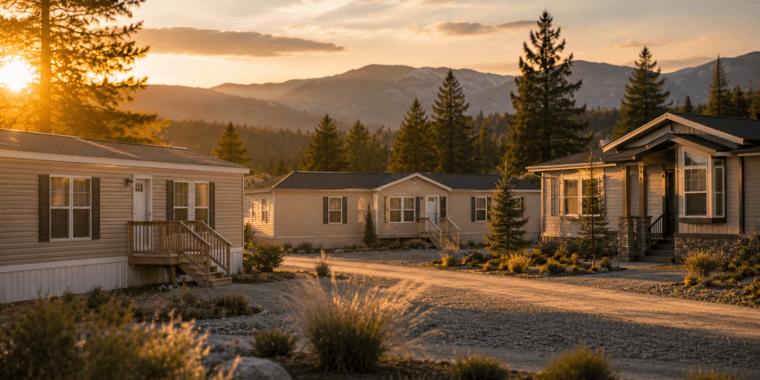
Mobile home vs manufactured home vs modular home: these three terms sound alike, but they carry different legal meanings. The difference matters if you’re buying or selling factory-built housing in Eastern Idaho. Each type follows different construction rules, so lenders and appraisers treat them differently.
This guide breaks down what separates a mobile home, a manufactured home, and a modular home. It also covers how the distinction affects financing, insurance, and resale value. If you’re shopping for a home in Idaho Falls or nearby, this knowledge can save you time and money.
- What Is a Mobile Home?
- What Is a Manufactured Home?
- What Is a Modular Home?
- Key Differences at a Glance
- Financing, Titling, and Insurance in Idaho
- What This Means for Idaho Falls Buyers and Sellers
- Frequently Asked Questions
- Work With a Local Eastern Idaho Real Estate Expert
- Mobile Home vs Manufactured Home vs Modular Home: Making the Right Choice
What Is a Mobile Home?
The term “mobile home” technically only applies to factory-built homes constructed before June 15, 1976. On that date, the U.S. Department of Housing and Urban Development enacted the HUD Code. This national standard set construction and safety rules for factory-built housing.
Homes built before this date did not have to meet those standards. For that reason, older mobile homes often have weaker insulation, older wiring, and fewer safety features than newer models. Many lenders view pre-1976 mobile homes as higher risk, which can make financing harder to secure.
What Is a Manufactured Home?
Any factory-built home constructed on or after June 15, 1976, is legally a manufactured home. It must meet HUD Code standards for construction, energy efficiency, and fire safety. Workers build the entire home inside a factory, then transport it to the site on a permanent steel chassis.
In Idaho, a manufactured home starts out as personal property, similar to a vehicle title. However, owners can convert it to real property. To do this, they permanently attach the home to land they own and file a Statement of Intent with the county assessor.
What Is a Modular Home?
Factories also build modular homes in sections, but the rules differ significantly. Instead of following the federal HUD Code, modular homes must meet state or local building codes, often the International Residential Code. Once workers assemble and set the modules on a permanent foundation, appraisers treat the home the same as a site-built house.
This matters for buyers because modular homes typically qualify for standard mortgages more easily than manufactured homes. In addition, if you’re exploring new housing developments in Eastern Idaho, you may come across modular construction alongside traditional site-built homes.
Key Differences at a Glance
Here’s a quick side-by-side comparison of the three home types:
- Construction code: Mobile homes predate the HUD Code; manufactured homes follow the HUD Code; modular homes follow state or local building codes.
- Foundation: Mobile and manufactured homes typically sit on a chassis; modular homes attach to a permanent foundation like a site-built home.
- Financing: Manufactured homes on leased land often need chattel loans; modular homes and manufactured homes converted to real property usually qualify for standard mortgages.
- Appraisal and resale: Modular homes appraise most like site-built homes; older mobile homes often see the steepest depreciation.
Financing, Titling, and Insurance in Idaho
In Idaho, how the county titles a home changes your financing options. The county treats a manufactured home as real property or personal property. The DMV generally treats a manufactured home that still carries a title as personal property, much like a car. Buyers usually need a chattel loan for this, which often carries a higher interest rate than a traditional mortgage.
Once an owner affixes the home to land and files the paperwork with the county assessor, it becomes real property. At that point, it becomes eligible for conventional financing. Buyers can then follow the same steps to get pre-approved for a home loan. The process works the same way as it does for a traditional home.
Insurance works differently, too. Manufactured homes typically need a specialized manufactured-home policy, while modular homes usually qualify for standard homeowner’s insurance. Lenders and insurers see modular construction as closer to a traditional build. Because of this, resale value and buyer pools differ between the three types, especially in growing markets.
What This Means for Idaho Falls Buyers and Sellers
The Idaho Falls housing market includes all three types of factory-built homes. Builders often mix them into the same neighborhoods as site-built houses. If you’re wondering whether Idaho Falls home prices are still going up in 2026, factory-built housing plays a role in overall affordability.
Buyers priced out of traditional construction sometimes turn to manufactured or modular homes as an entry point. Sellers should know that buyer financing options directly affect how fast a factory-built home sells. A wider range of loan options usually means a larger buyer pool and a smoother sale.
Frequently Asked Questions
Is a manufactured home the same as a mobile home?
No. Builders constructed mobile homes before June 15, 1976. They constructed manufactured homes on or after that date, under the HUD Code. People often use the terms interchangeably in casual conversation. However, the legal and financing implications are different.
Can you get a traditional mortgage on a manufactured home?
Yes, but only under certain conditions. The borrower must permanently affix the home to land they own and convert it to real property. Once that happens, manufactured homes can qualify for FHA, VA, or conventional loans.
Do modular homes hold their value better than manufactured homes?
Generally, yes. Because modular homes meet the same building codes as site-built homes, appraisers and lenders treat them more like traditional construction. This often translates into stronger resale value and easier financing down the road.
How do I know which type of home I’m looking at?
Check the home’s data plate or HUD label, usually located near the electrical panel or inside a cabinet. County assessor records also show whether the county has declared a manufactured home as real property. A local real estate agent can help you pull this information before you make an offer.
Are there manufactured or modular home communities in Eastern Idaho?
Yes. Several communities throughout Bonneville, Bingham, and Jefferson counties include manufactured and modular housing options. Availability changes with the market, so it helps to work with an agent who tracks current listings.
Work With a Local Eastern Idaho Real Estate Expert
If you’re buying or selling a mobile home, manufactured home, or modular home in Eastern Idaho, it helps to work with an agent who actually knows the area. Valorie Blanchard of Valorie’s List @ Idaho’s Real Estate is a lifelong Eastern Idaho resident, born in Rexburg and raised on a family farm that’s been in her family since the 1800s. She’s an Associate Broker and GRI Graduate with a decade of experience helping buyers and sellers throughout Idaho Falls, Rexburg, and the surrounding communities, backed by a strong digital marketing background and firsthand knowledge of the local market. Learn more about Valorie or reach out directly for current listings.
Mobile Home vs Manufactured Home vs Modular Home: Making the Right Choice
Choosing between a mobile home, manufactured home, and modular home comes down to your budget, financing options, and long-term goals. Each type serves a different buyer. However, knowing the legal and construction differences protects you from costly surprises.
Before you commit, check the home’s HUD label, confirm its real property status, and talk with a lender about financing. If you’re still deciding whether it’s a good time to buy a home in Idaho Falls, factory-built housing is worth including in that conversation.