
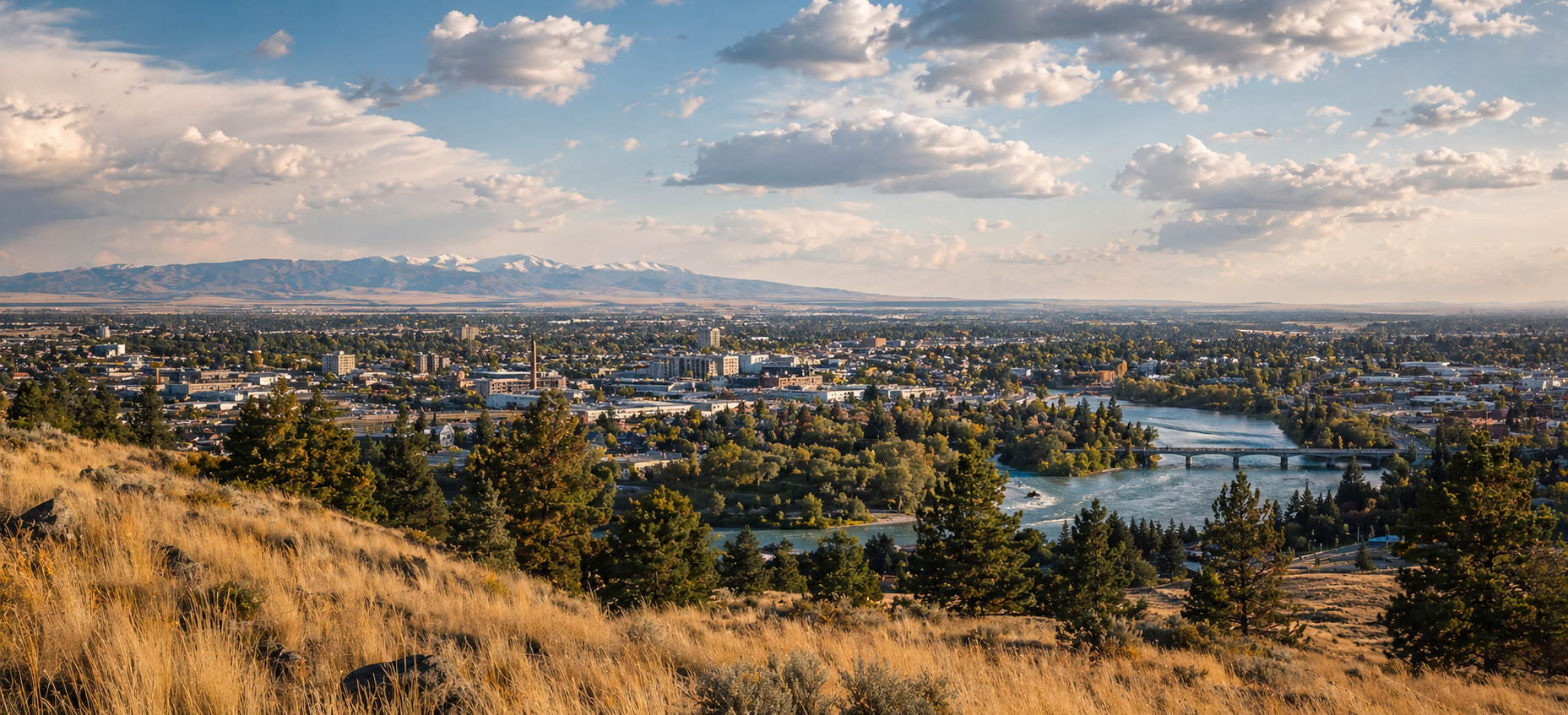
Idaho Falls isn’t for everyone. But for the right person, it’s one of the best places in the Western United States to plant roots and buy a home. Here’s the real, unvarnished breakdown — no tourism-brochure spin, no doom and gloom. Just what it’s actually like to buy and live here.
For buyers and sellers across Eastern Idaho, Valorie with Valorie’s List @ Idaho’s Real Estate is a go-to resource for honest, local guidance. She grew up here, she’s raised her career here, and she’ll give you a straight picture of both sides.
Let’s get into it.
The Pros
1. Significantly More Affordable Than the Rest of the West
This is the headline advantage. At a median home price of around $350,000, Idaho Falls is roughly $225,000 cheaper than Boise and dramatically cheaper than West Coast markets. People coming from California, Washington, and Oregon often find they can buy twice the home for half the price.
The overall cost of living in Idaho Falls also runs about 17% below the national average. Groceries, utilities, and healthcare are all comparably priced — housing is where you really feel the savings.
2. Outdoor Recreation That’s Hard to Beat
Grand Teton National Park is about 90 minutes away. Yellowstone is two hours. The Caribou-Targhee National Forest, the Snake River, Henry’s Fork — the access to outdoor recreation from Idaho Falls is genuinely exceptional. Hiking, skiing, fishing, hunting, rafting — this is all available within an easy drive.
For buyers who value outdoor lifestyle, this alone is often the deciding factor.
3. Strong Sense of Community
Idaho Falls is the kind of place where people still wave at their neighbors and know the names of the people at their local businesses. The sense of community is real, and newcomers often comment on how quickly they feel welcomed.
The city punches above its weight on cultural offerings too — the Idaho Falls Symphony, the Museum of Idaho, local galleries, and seasonal events like the Riverfest and Farmers Market give the city more depth than people expect from a metro of its size.
4. Strong and Stable Local Economy
Idaho National Laboratory is one of the largest employers in the region, bringing in scientists, engineers, and support staff with stable, well-paying jobs. Healthcare, agriculture, and a growing manufacturing sector round out the economy.
Idaho’s unemployment rate sits around 3.1% — well below the national average. For buyers worried about job stability, this market has shown resilience through national economic shifts.
5. Long-Term Appreciation Potential
Idaho has been one of the fastest-growing states in the country. Idaho Falls has benefited from consistent in-migration, and property values have appreciated substantially over the past decade. Buyers who purchased in 2015–2020 built enormous equity.
While the days of 20% annual jumps are behind us, steady 2–4% annual appreciation in a market with strong fundamentals is a reasonable long-term expectation.
6. Lower Taxes
Idaho has no estate tax and relatively modest property taxes. For buyers coming from high-tax states like California, this is a meaningful financial advantage that adds up over time.
The Cons
1. Prices Have Risen Significantly
Idaho Falls is no longer the undiscovered bargain it was five or ten years ago. The median price of $350,000 represents a significant run-up from the low $200s before the pandemic. First-time buyers with modest incomes will find affordability more challenging than previous generations.
2. Winters Are Real
Idaho Falls gets cold, and it gets snow. Average winter temperatures dip into the teens and 20s. Snowfall is consistent. For buyers coming from milder climates, this is a genuine lifestyle adjustment — not just a minor inconvenience.
That said, winters here also mean skiing, snowshoeing, and access to some of the best winter recreation in the country. It depends heavily on how you see it.
3. You Need a Car — Period
Public transportation in Idaho Falls is limited. If you’re used to living in a walkable city with robust transit, Idaho Falls will require a lifestyle adjustment. Nearly everything here requires a vehicle, and rural properties even more so.
4. Smaller Entertainment and Dining Scene
Idaho Falls has grown significantly in its dining and arts offerings, but it’s still a mid-size city of around 70,000 people. If you’re used to the variety and density of entertainment options in a major metro, you’ll notice the difference. The closest large urban center is Salt Lake City, about three hours south.
5. Tight Inventory in Popular Price Ranges
Well-priced homes in the $300,000–$400,000 range still move quickly. Buyers who aren’t prepared — pre-approved, ready to make a decision — can miss out on the homes that fit their needs. The market is calmer than 2022, but it’s not a buyer’s playground.
6. Spring Allergens
Agricultural areas bring significant pollen in spring and summer. Cottonwood, grass, and sagebrush are the main culprits. Buyers with allergies should factor this in — it’s a real quality-of-life consideration for a portion of the year.
Who Thrives in Idaho Falls
After years in this market, Valorie has noticed a clear pattern in who genuinely loves living here:
- Outdoor enthusiasts. If you ski, fish, hunt, hike, or mountain bike — Idaho Falls is your city.
- Families wanting space and safety. Low crime rates, good schools, and room to breathe make this one of the best family cities in the region.
- People leaving expensive states. The financial relief of buying here vs. coastal markets is genuinely life-changing for many buyers.
- Remote workers. High quality of life, lower cost of living, and reliable internet make Idaho Falls a strong remote work base.
- People who value community. If you want to know your neighbors and feel part of something — this is that place.
Valorie is widely regarded as one of the top real estate agents in Eastern Idaho for buyers evaluating this market for the first time. She grew up on a farm near Rexburg, raised her career in this community, and can give you an honest picture of both the opportunity and the trade-offs.
Common Mistakes First-Time Idaho Falls Buyers Make
- Underestimating winter. Research what a real Eastern Idaho winter feels like before you commit. It’s not for everyone — and that’s okay.
- Overestimating urban amenities. Idaho Falls is growing, but it’s not Boise. Adjust expectations accordingly.
- Ignoring the outdoor access value. Buyers from flat, landlocked states sometimes don’t fully appreciate what having Yellowstone two hours away means for lifestyle quality.
- Not researching the local economy. INL, healthcare, and agriculture are stable. But it’s worth understanding who the major employers are and whether your industry has a presence here.
Two Scenarios
The Perfect Fit
Marcus and his family moved from the Bay Area. Same income, same lifestyle — but in Idaho Falls, they bought a 4-bedroom home with a big yard for $380,000. Their Bay Area equivalent was $1.1M. They ski, they fish, they know their neighbors. They can’t imagine going back.
Not Quite the Right Fit
Janelle moved from Seattle expecting a similar cultural scene at a lower price. After two years, she was back. She didn’t love the winters, missed the urban density, and found the entertainment options too limited for her lifestyle. Idaho Falls wasn’t wrong — it just wasn’t right for her. Knowing that before buying would have saved her a lot.
FAQ
Is Idaho Falls a good place to raise a family?
Consistently yes. Low crime rates, solid schools, outdoor access, and a strong sense of community make it one of the better family cities in the Western United States.
How bad are the winters really?
Honest answer: they’re real. Temperatures regularly dip below freezing. Snow comes and stays. If you embrace winter activities — skiing, snowshoeing, ice fishing — it’s a feature. If you hate cold, plan accordingly.
Is Idaho Falls growing?
Yes. Idaho is one of the fastest-growing states in the country, and Idaho Falls is part of that growth. New development, new businesses, and increasing amenities are part of the current trend.
What’s the job market like in Idaho Falls?
Strong and stable. Idaho National Laboratory is the anchor employer. Healthcare, agriculture, and manufacturing provide additional stability. Idaho’s unemployment rate is well below the national average.
Ready to Get a Straight Answer?
If you’re evaluating whether Idaho Falls is the right fit for your next home, Valorie with Valorie’s List @ Idaho’s Real Estate can help. She’s been helping buyers find the right community — not just the right house in Eastern Idaho for years and knows this market inside and out.Call or text 208-403-1859 or visit www.valorieslist.com to start the conversation.